Towards an Effective Legal Framework for the Transition to a Green Economy in the Kingdom of Saudi Arabia 2030
Article Sidebar
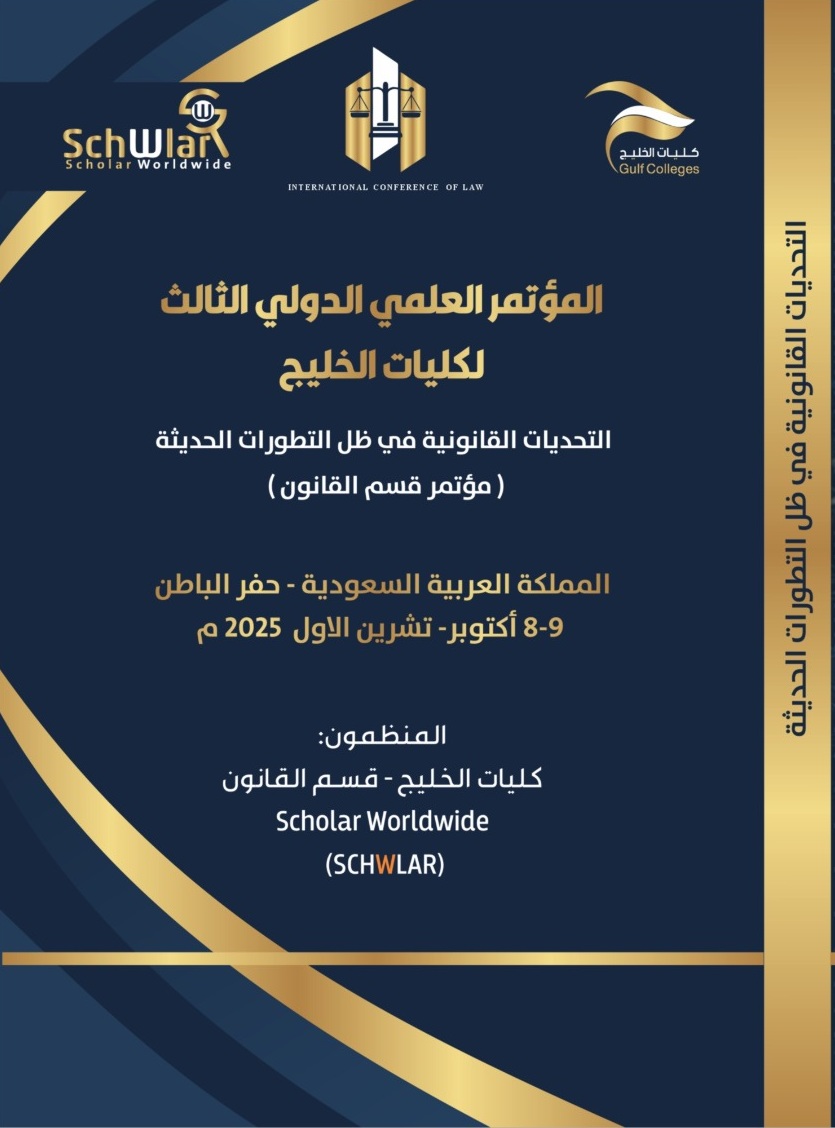
Main Article Content
Abstract
This research aims to clarify the role of the legal framework in supporting the transition toward a green economy within the context of Saudi Arabia’s vision 2030, as a development oriented economic choice that seeks to balance economic growth with environmental protection. The study is based on the premise that the green transition can’t be achieved solely through environmental policies but rather requires an effective legal system capable of guiding economic behavior and promoting sustainable investment. The research analyzes the role of environmental legislation in improving the efficiency of natural resource use, encouraging innovation in renewable energy sectors, and integrating circular economic principles into public economic policies. It also explores how legal regulations can contribute to redirecting investment flows toward green sectors and reducing long-term economic risks associated with environmental degradation. In addition, the study addresses the practical challenges related to the implementation of green legal frameworks, particularly the need to balance environmental protection requirements with economic activity demands. It highlights the importance of coordination between environmental regulations and fiscal and investment policies to ensure policy coherence and effective implementation. Special attention is given to the role of the private sector as a key partner in achieving a successful green transition, through the establishment of a stable and incentive-based legal environment. The research concludes that the success of the transition toward a green economy in Saudi Arabia depends on the establishment of a flexible, sustainable and integrated legal framework that transforms environmental obligations into economic opportunities, enhances economic efficiency, and supports the achievement of sustainable development goals.
Article Details

This work is licensed under a Creative Commons Attribution 4.0 International License.